He’s 102. He Was There. And He’s Still Not Done Talking About It.
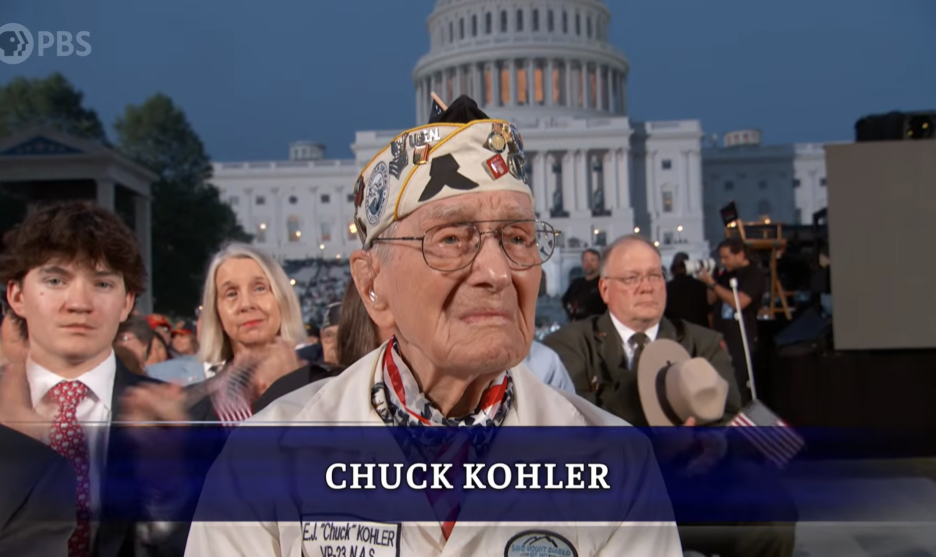
A 102-year-old man. The West Lawn of the U.S. Capitol. Millions of people watching from home. And a story that started on a Sunday morning in December 1941, when a 17-year-old Navy boy looked up from the letter he was writing to his mother and saw planes diving out of the sky over Pearl Harbor.
He thought, for a moment, they were Americans showing off. Then the bombs started falling.
"I wanted my family to know that if I died, I died fighting, not hiding," Earl "Chuck" Kohler said.
He didn't die. He ran for the ammunition locker instead.
The Boy Who Ran Toward It
Kohler had enlisted in the Navy in April 1941, at age 17, with his parents' permission. Eight months later, he was at Ford Island — the airfield in the middle of Pearl Harbor — when the attack began. He found himself behind a .50 caliber machine gun, fending off Japanese fighters.
He survived. He was later deployed to the Marshall Islands and witnessed the Japanese surrender in August 1945. Then he came home to California and made a promise to the ones who didn't.
He has kept it every single day since.
"I try to share my experience with anybody who would come and listen," he told The Epoch Times. "I thought that way they would have a better understanding of and a deeper appreciation for what those people experienced."
Every December 7th, he climbs Mount Diablo in California and lights a beacon at the top. Not for cameras. Not for applause. For the ones who never came home. The ritual went quietly for decades before it went viral — and when it did, a 102-year-old man reminded the internet that some promises don't have an expiration date.
In March, four generations of Kohler men walked onto the floor at Michigan State's Breslin Center for his great-grandson Jaxon's senior night. Chuck walked to halfcourt, held a salute for the National Anthem, and the crowd rose to its feet.
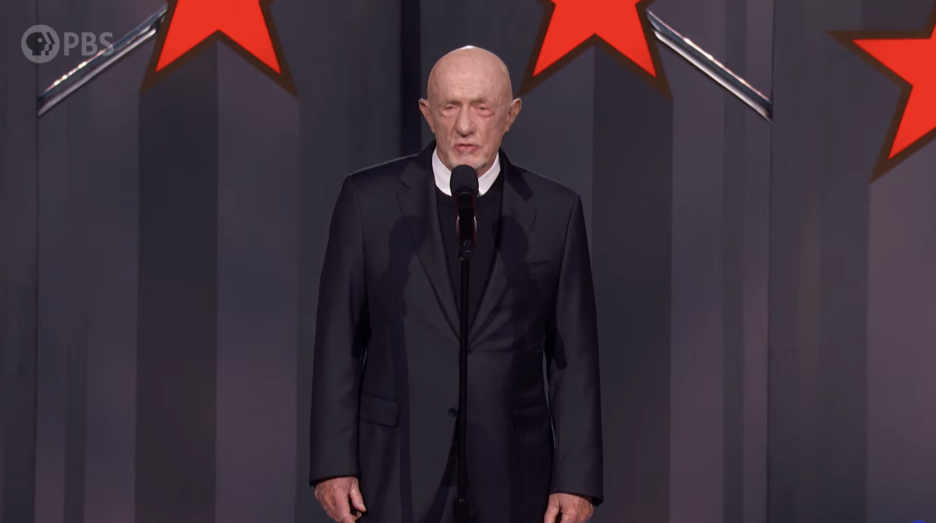
On Sunday, he got his biggest stage yet — the West Lawn of the U.S. Capitol, in front of millions. Actor Jonathan Banks told his story to the nation — and when he was done, he stepped back from the script and said what he felt: "I stand on their shoulders. We stand on their shoulders. Every American." KPBS
Gary Sinise, who has championed veterans for decades, framed the moment with quiet urgency: "We're losing 1,000 World War II veterans every single day, so time is short."
Kohler is now one of only eleven living eyewitnesses to Pearl Harbor. Eleven. The window to hear these stories from the people who actually lived them is not closing slowly. It is closing now.

The Woman Who Ran Toward It Too
Eighty-five years after Pearl Harbor, on a clear Tuesday morning in September 2001, a different kind of attack hit a different landmark — and produced a different kind of hero.
Lieutenant General Patricia D. Horoho was in her office at the Pentagon, 100 yards from where Flight 77 hit the building. Trained in clinical trauma nursing and mass casualty response, she ran toward the impact, the smoke, and the fire.
Speaking through Academy Award-winning actress Melissa Leo at the concert, Horoho's voice described what drove her: "My dad fought in World War II, Korea, Vietnam. I was born and raised at Fort Bragg. What I learned was that preparedness allows you to react when you need to. You don't think twice — you do what you have to do."
She later became the first female Surgeon General of the United States Army. The Pentagon attack was not the end of her story. It was the moment that defined what came after.
What These Two Stories Have in Common
A 17-year-old sailor in 1941. A nurse in 2001. Six decades apart, different wars, different wounds, different worlds. But the same instinct — to run toward what everyone else is running from. To protect their country. To save the people they loved.
Chuck Kohler is 102. He still climbs the mountain every December. He still talks to anyone who will listen. He was on the West Lawn of the U.S. Capitol on Sunday night, and he will be somewhere telling this story again before the year is out — because that is the promise he made, and Chuck Kohler does not break promises.
As producer Michael Colbert put it: "It's so important that we never forget. Chuck was part of the Greatest Generation that saved the world. We're blessed to still have him with us."
The 2026 National Memorial Day Concert streams through June 7 on PBS.org and the free PBS app.
© 2026 Enstarz.com All rights reserved. Do not reproduce without permission.


