Audrey Hepburn's Timeless Evolution from Aspiring Ballerina to Hollywood Icon
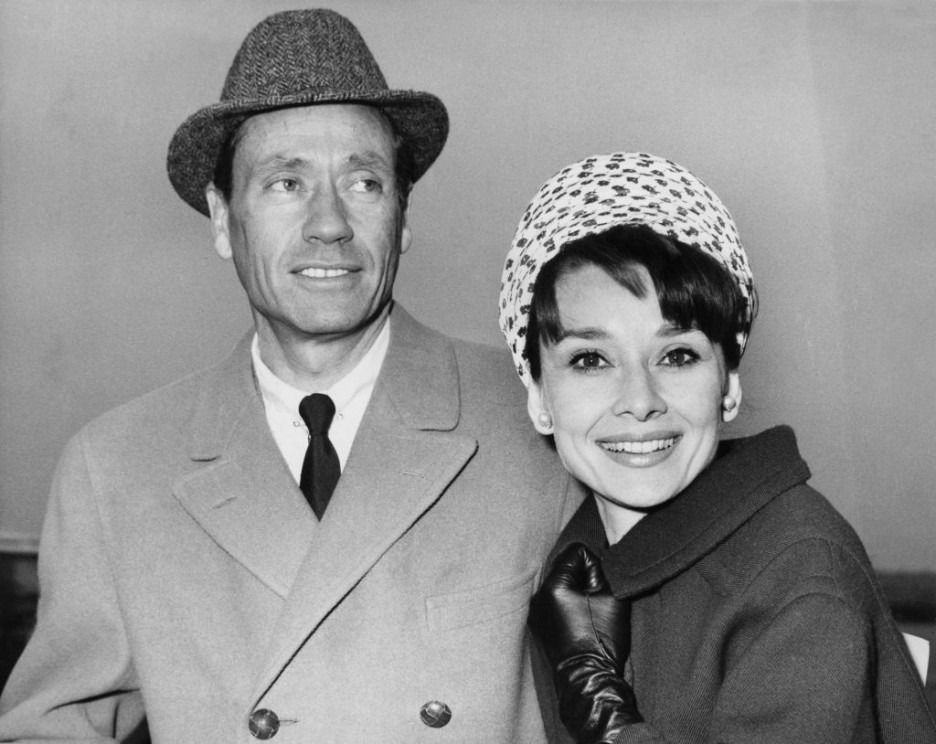
Audrey Hepburn was one of the most beautiful and famous stars of the golden age of Hollywood. With her wide-eyed grace, pixie-like charm, and an effortless mix of vulnerability and sophistication, she won over audiences all over the world and became known for her timeless style and movie magic.
Hepburn's rise to fame as a movie star was anything but a fairy tale. Born in the shadows of Europe before World War II, her early dreams were not of fame and fortune, but of the strict world of ballet. Her journey was shaped by war, hardship, and her own strength, turning a weak dancer into one of the most famous movie stars of all time, as per History Hit.
Audrey Kathleen Ruston was born on May 4, 1929, in Ixelles, Brussels, Belgium. Her father, Joseph Victor Anthony Ruston, was British, and her mother, Ella van Heemstra, was a Dutch baroness. As her parents' marriage fell apart, she moved between Belgium, England, and the Netherlands, which was a lot of fun and not very stable. In 1935, Hepburn's father, who was sympathetic to fascism, left the family. Hepburn later said that this was the hardest thing that had ever happened to her. Audrey's mother raised her most of the time.
She found comfort in dance, which showed off her natural talent and set the stage for her early goals.
When World War II broke out in 1939, Hepburn, who was only 10 at the time, went through a nightmare. She and her mother moved to Arnhem in the Netherlands, hoping for peace, but the Nazi invasion destroyed that hope. Hepburn used the name Edda van Heemstra to hide her British roots.
During the occupation, her uncle was killed as punishment for resisting, one of her half-brothers was sent to a labor camp, and another was forced to go into hiding. In the middle of all the chaos, she went to school at the Arnhem Conservatory, where she became a star student and even played in secret "black evenings," which were underground concerts to raise money for the Dutch resistance. She worked for the underground by delivering messages and newspapers, helping downed Allied pilots, and volunteering at a hospital to help the wounded.
The "Hunger Winter" in the Netherlands from 1944 to 1945 left her malnourished. She lived on tulip bulbs and had anemia, jaundice, and edema, which would affect her health for years.
After the war, WIkipedia notes that Hepburn's love of ballet grew. In 1945, she moved to Amsterdam to study with famous teacher Sonia Gaskell. In 1948, she got a scholarship to London's Ballet Rambert. Her teachers praised her technique and ability to express herself, but the hardships of war had taken their toll.
At 5'7" and with a weak frame, she was thought to be too tall and undernourished to be a prima ballerina star. "I was told I didn't have the body for it," Hepburn said in interviews, which made her rethink her future. She wasn't scared, so she went to the stage and worked as a chorus girl in West End musicals like High Button Shoes and Sauce Tartare. These jobs helped her get better at performing and got the attention of talent scouts.
Acting Career
It was by chance that Hepburn became an actress. While filming the small part of a cigarette girl in Monte Carlo Baby (1951), she caught the eye of French novelist Colette, who cast her as the lead in the Broadway version of Gigi. The play was a big hit, and it won Hepburn a Theatre World Award and got her into Hollywood. William Wyler's Roman Holiday in 1953 was her big break.
Hepburn won an Academy Award for Best Actress for her role as a runaway princess opposite Gregory Peck. At just 24, she became the first person to win an Oscar, a BAFTA, and a Golden Globe for the same role. That same year, she won another Tony Award on Broadway for Ondine and met her first husband, actor Mel Ferrer.
Hepburn's career took off from there. She signed a deal with Paramount to make seven movies. In Billy Wilder's Sabrina (1954), she played the daughter of a chauffeur who was in a love triangle with Humphrey Bogart and William Holden.The part showed off her gamine charm and got her another Oscar nomination.
In the musical Funny Face (1957), she was able to use her ballet background to do graceful dance numbers that showed off her graceful poise. But it was Breakfast at Tiffany's (1961) that made her a cultural icon.
Hepburn was the epitome of modern femininity as the quirky Holly Golightly, wearing Hubert de Givenchy's famous little black dress. She was both playful and serious. Despite saying she felt miscast as an extrovert ("I'm an introvert playing the part of an extrovert"), the movie got her a fourth Oscar nomination and made her a fashion icon.
Hepburn's movies were a mix of drama, romance, and thrillers. In The Nun's Story (1959), she played a nun who was struggling with her faith. In Wait Until Dark (1967), she played a blind woman in a suspenseful turn that earned her her fifth Oscar nomination. In My Fair Lady (1964), there was a lot of controversy over her dubbing, but her portrayal of Eliza Doolittle charmed everyone.
After starring in hits like Charade (1963) with Cary Grant in the late 1960s, she took a break from acting to focus on her family. She married Ferrer in 1954 (they had a son named Sean before divorcing in 1968) and later Italian psychiatrist Andrea Dotti (with a son named Luca, divorcing in 1982). She was with actor Robert Wolders until she died, and they were together for a long time.
Who is Audrey Hepburn Offscreen?
But Hepburn's growth went beyond what was shown on screen. Her experiences during the war made her dedicated to helping others for the rest of her life. She was named a UNICEF Goodwill Ambassador in 1989 and traveled to Ethiopia, Somalia, Bangladesh, and Vietnam, where she spoke out for children's rights, clean water, and vaccinations.
In 1989, she told Congress, "I saw only one clear truth: These are not natural disasters but man-made tragedies for which there is only one man-made solution—peace." She won the Presidential Medal of Freedom in 1992 and the Jean Hersholt Humanitarian Award after she died.
No one else has ever had a fashion legacy like Hepburn's. Her work with Givenchy, starting with Sabrina, made minimalist chic—big sunglasses, capri pants, and ballet flats—popular. This was a style that went against the era's ideas of voluptuousness. She was the most beautiful woman in the world and inspired generations. Her style auctions still bring in millions of dollars today.
Sadly, Hepburn died in Switzerland on January 20, 1993, at the age of 63 from a rare type of appendix cancer. But her spirit lives on: she won an EGOT (Emmy, Grammy, Oscar, and Tony) and is ranked third among the American Film Institute's greatest female screen legends. She is also a symbol of grace under pressure. Audrey Hepburn didn't just change; she went beyond herself. Her legacy lives on in film, fashion, and charity work.
© 2026 Enstarz.com All rights reserved. Do not reproduce without permission.


