JFK Jr.’s Last Conversation With Instructor Raises Questions About Fatal Crash
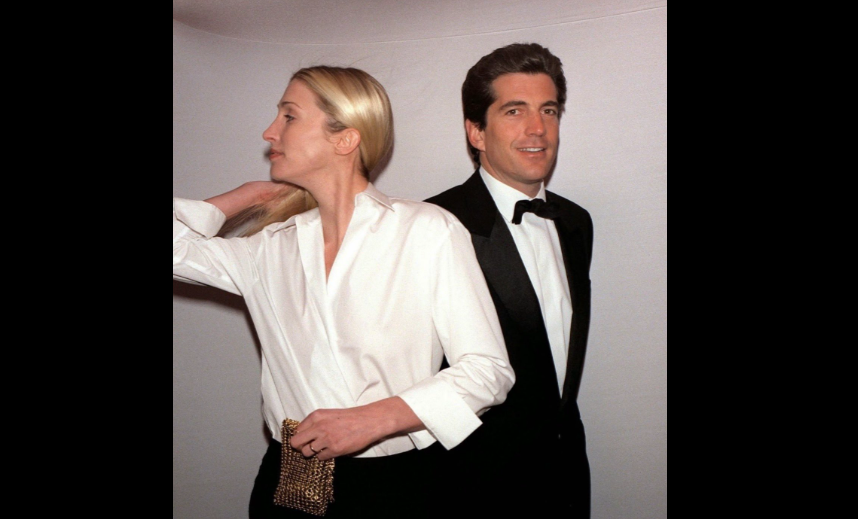
A newly revisited account of John F. Kennedy Jr.'s final hours is drawing attention to a key decision he made before his fatal plane crash in 1999: choosing to fly alone.
According to a report by the National Transportation Safety Board (NTSB), Kennedy told his flight instructor on July 16, 1999, that he "wanted to do it alone" and did not need a second pilot for the trip. That decision has become a central point in understanding the tragic crash that killed him, his wife, Carolyn Bessette Kennedy, and her sister Lauren Bessette.
Kennedy, 38 at the time, was still training for his instrument rating, a certification that allows pilots to fly using only cockpit instruments when visibility is poor.
His instructor later told investigators that while Kennedy had basic flying ability, he was "not ready for an instrument evaluation" and might struggle with added tasks in difficult conditions, ENews reported.
The flight departed from Essex County Airport in New Jersey at about 8:39 p.m., heading toward Martha's Vineyard.
Kennedy planned to drop off Lauren before continuing to Hyannis Port with Carolyn for a family wedding. However, weather conditions that night were hazy, making it harder to rely on visual cues.
JFK Jr. Made Chilling Comment to Flight Instructor on Last Day of His and Carolyn Bessette-Kennedy's Life https://t.co/oz2NzSKfL4
— InStyle (@InStyle) March 26, 2026
John F. Kennedy Jr. Faced Deadly Conditions
An aviation expert involved in the investigation explained that once Kennedy flew over open water, the lack of a visible horizon likely made the situation much more dangerous.
"There were no visual cues," the expert said, noting that pilots in such conditions must depend heavily on instruments, People reported.
Flight data showed that about an hour into the trip, the aircraft began to turn and descend.
The NTSB reported that the plane's movements became increasingly unstable, with its descent rate exceeding 4,700 feet per minute before crashing into the Atlantic Ocean in darkness.
Experts believe Kennedy may have experienced spatial disorientation, a condition where a pilot's senses give false signals about direction and movement.
One investigator described the final moments as similar to a "graveyard spiral," where the plane turns downward in a tightening spiral until impact.
"If he just would've flown straight and level... he would've been over Martha's Vineyard in three to five minutes," the expert noted, pointing to how close the aircraft was to its destination.
© 2026 Enstarz.com All rights reserved. Do not reproduce without permission.


