Writer Hunter S. Thompson's Death Ruled as Suicide After 2026 Reinvestigation; Widow's Concerns Dismissed
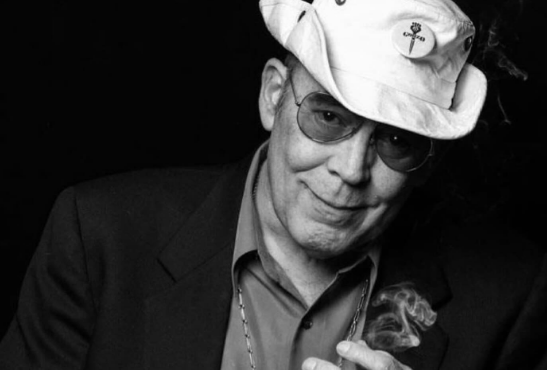
Colorado investigators have reaffirmed that gonzo journalist Hunter S. Thompson died by suicide in 2005, dismissing concerns raised by his widow that prompted a months-long state review of the case.
The Colorado Bureau of Investigation released its findings on Friday, concluding that "all speculative theories could not be substantiated" after a comprehensive review launched in September 2025 at the request of Thompson's widow, Anita Thompson. The review examined original law enforcement records, autopsy reports, and conducted new interviews with family members and officials involved in the initial 2005 investigation.
Thompson, 67, was found dead from a self-inflicted gunshot wound to the head in the kitchen of his Woody Creek home, known as Owl Farm, on February 20, 2005. The legendary journalist, famous for pioneering gonzo journalism through works like "Fear and Loathing in Las Vegas," had been suffering from significant depression and chronic pain in his final years, according to the New York Times.
The reinvestigation was initiated after Anita Thompson contacted Pitkin County Sheriff Michael Buglione with concerns she had heard from friends and possible relatives about the circumstances of her husband's death.
Sheriff Buglione, who was not the sheriff at the time of Thompson's death but had long believed the original investigation was handled appropriately, requested the Colorado Bureau of Investigation conduct an independent review.
During the investigation, state agents interviewed Anita Thompson, Thompson's son Juan, his ex-daughter-in-law Jennifer, the original lead investigator, the county coroner, and former Pitkin County Sheriff Joe DiSalvo. Investigators also examined the death scene and analyzed bullet trajectory evidence.
The findings directly addressed the widow's concerns by confirming that Thompson's body was not moved or staged after death, contrary to speculation that had circulated among some acquaintances. Crime scene photographs supported the conclusion that the body position aligned with the bullet's trajectory, indicating no post-mortem manipulation.
In a statement accompanying the announcement, Anita Thompson expressed gratitude for the investigation, saying it allows "all of us who loved Hunter to move forward with a clean conscience". However, the dismissal of her concerns marks the end of a process that had reopened questions about the iconic writer's final moments for the first time in over two decades, CPR reported.
The original investigation in 2005 determined Thompson used a .45-caliber handgun. His then-6-year-old grandson was in the house at the time, and his son, Juan, discovered the body in the kitchen. Anita Thompson had been on the phone with her husband when he died, later recalling she heard the "clicking of the gun" before the fatal shot.
Coroner Dr. Stephen Ayers noted during the review that Thompson had shown physical and mental decline and idolized fellow author Ernest Hemingway, who also died by suicide. No toxicology report was conducted at the time of death, a point that had fueled some speculation.
The Colorado Bureau of Investigation concluded that interviews confirmed Thompson endured severe depression and chronic pain, supporting the suicide determination. The agency found no new physical evidence, facts, or circumstances that would lead to a conclusion different from the original investigation, as per Yahoo News.
The case review cost approximately $45,000 and took four months to complete, providing what officials hope will be final clarity for Thompson's family and the public. For the literary world, the confirmation brings closure to the mysterious circumstances surrounding the death of one of journalism's most unconventional and influential voices.
© 2026 Enstarz.com All rights reserved. Do not reproduce without permission.


